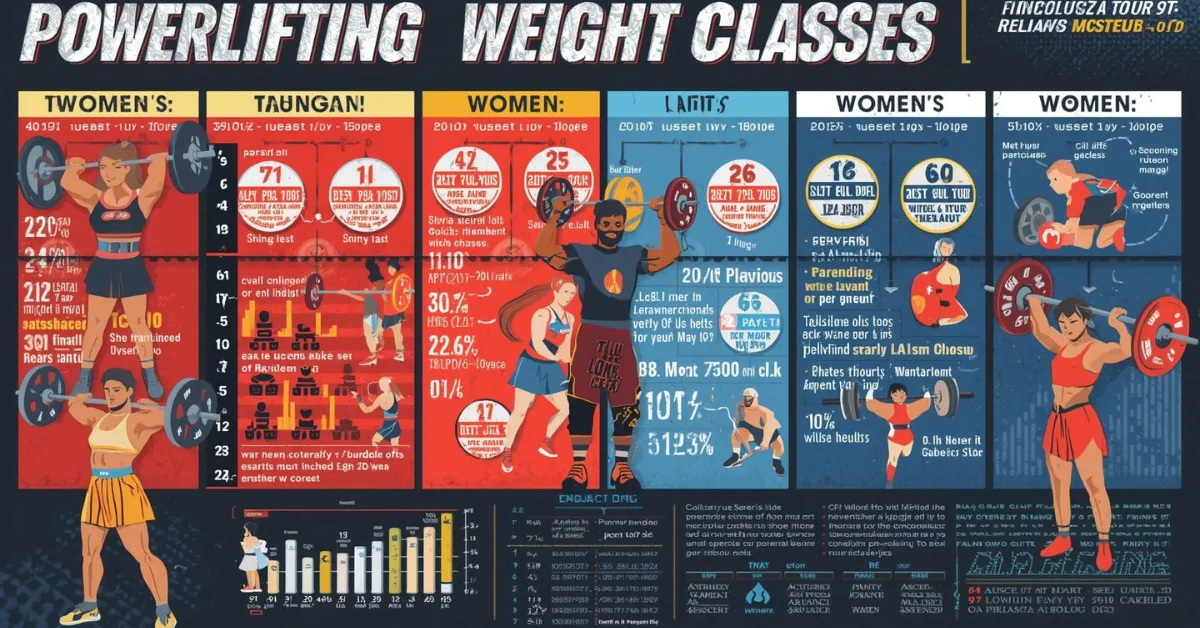
Powerlifting Weight Classes Complete Guide for people explains the structured divisions used in powerlifting competitions to ensure fair competition and safety. Many lifters struggle to understand which weight class they belong to or how classes affect strategy and performance. A simple “choose your weight” approach misses the nuances of rules, records, and competitive advantages.
This guide covers all official weight classes for both people helping athletes make informed decisions, track progress, and compete effectively. Understanding powerlifting weight classes adds clarity, fairness, and confidence to training and competition.
Powerlifting is more than just lifting heavy weights; it’s a strategic sport where strength meets science. Whether you’re squatting, bench pressing, or deadlifting, your performance is influenced not only by your training but also by the weight class you compete in.
Weight classes exist to ensure fair competition, allowing lifters of similar body weight to compete on equal footing. Choosing the right class can make a huge difference in your results, from maximising your strength potential to improving your chances of success in competitions.
What Are Powerlifting Weight Classes?
In powerlifting, weight classes are divisions that group athletes based on their body weight. The primary purpose is to create fair competition, ensuring lifters compete against others of similar size and strength potential. Without weight classes, heavier athletes would naturally dominate lighter competitors, making the sport less equitable and discouraging for those with smaller body frames.
Weight classes are essential in all major powerlifting federations, including the International Powerlifting Federation (IPF), USAPL, and other national and regional organisations. Each federation may have slightly different weight divisions, but the concept remains the same: athletes are categorised so that strength-to-weight ratios can be compared fairly.
For people, the number and range of weight classes differ. Men generally compete in heavier classes, while women have lighter divisions to reflect physiological differences. There are also special categories for youth, juniors, and masters, which allow age-appropriate competition and promote safety and long-term athletic development.
Understanding weight classes is crucial not just for competition but also for training and strategy. Knowing your ideal class can influence your nutrition, weight management, and training plan. Some lifters aim to stay naturally within a class, while others strategically cut or gain weight to compete in a more advantageous division.
By understanding the structure and purpose of weight classes, athletes can make informed decisions that maximise their performance while staying healthy and competitive.
Standard Powerlifting Weight Classes
Powerlifting competitions are divided into standard weight classes to ensure fairness and allow lifters of all sizes to compete effectively. These classes vary slightly depending on the federation, but the most widely recognised standards come from the International Powerlifting Federation (IPF).
Men’s Weight Classes
For adult male lifters, the IPF currently recognises the following classes: 55kg, 59kg, 66kg, 74kg, 83kg, 93kg, 105kg, 120kg, and 120+kg. Each class allows lifters to compete against others with similar body weight, making strength-to-weight comparisons more meaningful. Some federations may have slight variations, but these ranges are the most common for international competitions.
Women’s Weight Classes
Female lifters compete in these standard classes: 43kg, 47kg, 52kg, 57kg, 63kg, 72kg, 84kg, and 84+kg. Similar to the men’s divisions, the goal is to provide fair competition while accounting for natural physiological differences between people.
Youth and Junior Weight Classes
For younger lifters, federations offer youth and junior divisions with adjusted weight ranges. These classes prioritise safety and long-term development, allowing athletes to gain experience and build strength gradually. Common youth male classes start at 44kg, while female youth classes may begin at 40kg, with incremental increases to match growth and age.
Understanding these standard weight classes is essential for planning your training, nutrition, and competition strategy. Choosing the right class can help maximise your strength potential, improve competitive results, and reduce the risk of injury from extreme weight changes.
How Federations Influence Weight Classes
While the concept of powerlifting weight classes is universal, the specific classes and rules can vary depending on the federation you compete in. Major federations like the International Powerlifting Federation (IPF), USAPL, WPC, and Raw Unity each have slightly different divisions, rules, and regulations that affect how athletes choose their class.
One of the biggest differences is between RAW and Equipped lifting. RAW competitions allow minimal supportive gear, such as a belt or wrist wraps, while Equipped competitions permit specialised suits and shirts that can add significant weight to your lifts. Some federations may adjust weight classes slightly to account for these differences, which can affect how lifters strategically choose a division.
Additionally, each federation may have unique age divisions, including youth, junior, open, and masters categories. These divisions often have slightly adjusted weight ranges, ensuring athletes compete safely and fairly against peers of similar age and experience.
Choosing the right federation is not just about personal preference—it also impacts your competitive strategy. For example, a lifter may find a certain weight class more competitive in one federation than another, or they may prefer RAW competitions for a more natural lifting experience.
Understanding how federations influence weight classes is essential for serious competitors. It helps athletes plan training, nutrition, and weight management strategies while ensuring they compete in a fair and supportive environment.
Choosing the Right Weight Class
Selecting the right powerlifting weight class is one of the most important decisions for lifters, whether you’re a beginner or an experienced competitor. Your choice affects not only your competitive performance but also your training, nutrition, and overall health.
The first factor to consider is your natural body weight. Competing at a weight close to your natural body weight usually allows for optimal strength without the stress of extreme weight cutting or gain. Lifters who attempt drastic weight changes may experience decreased performance, fatigue, and higher injury risk.
Another factor is the strength potential relative to the class. Some lifters may choose to move up a class to gain muscle mass and improve overall strength, while others may cut slightly to compete in a lighter class where they can have a competitive edge. Both strategies have advantages and risks. Moving down a class might increase your chances of placing higher, but excessive cutting can reduce energy and power. Moving up a class allows for greater strength potential, but the competition may be tougher.
Age, experience, and body composition also play a role. Beginners are often advised to compete in their natural weight class to build experience safely. Advanced lifters may experiment strategically with weight changes to optimise their strength-to-weight ratio.
Ultimately, the right weight class balances your body’s natural characteristics with your competitive goals. Paying attention to your health, performance, and long-term development ensures that you can lift stronger, smarter, and safely.
Weight Cutting and Weight Gain Strategies
In powerlifting, managing your body weight is often a key part of competing successfully in your chosen weight class. Whether you need to drop a few kilograms or gain muscle mass, the approach must be strategic and safe. Extreme or rushed changes can harm performance, recovery, and overall health.
Weight Cutting involves temporarily reducing body weight to qualify for a lower class. Successful cutting usually focuses on gradual fat loss, hydration management, and smart dieting, rather than extreme dehydration or crash diets. For example, reducing caloric intake slightly while maintaining protein levels helps preserve strength. Timing is also critical—most lifters aim to reach target weight a few days before weigh-ins to allow the body to rehydrate and replenish glycogen.
On the other hand, weight gain strategies are essential for lifters moving up a class to maximise strength. This usually involves progressive resistance training, increased calorie intake, and sufficient protein to build lean muscle mass. Adequate sleep and recovery play a significant role in supporting muscle growth and maintaining performance.
It’s important to avoid drastic changes, as both rapid weight loss and excessive gain can lead to fatigue, injuries, and decreased lifting capacity. Tracking your weight, planning meals, and monitoring training performance are critical steps in a successful strategy.
By understanding safe weight cutting and weight gain methods, lifters can compete at their optimal strength while staying healthy, maximising their potential in their chosen powerlifting weight class.
Records and Performance by Weight Class
One of the most fascinating aspects of powerlifting weight classes is how performance scales with body weight. In general, heavier classes lift more total weight, but lighter lifters often excel in strength-to-weight ratios, demonstrating impressive power relative to their body size. Understanding records by weight class can provide insight into the potential of each division and help lifters set realistic goals.
For example, in men’s IPF competitions, world records for the 120+kg class can exceed 1,100 kg combined across squat, bench press, and deadlift, while lighter classes such as 66kg or 74kg may achieve totals around 600–700 kg. Similarly, in women’s divisions, lifters in the 84+kg class can lift combined totals of over 700 kg, while lighter classes like 52kg or 57kg often lift totals around 300–400 kg. These records highlight that each class has its own benchmark for elite performance.
It’s also important to note that federations may recognise slightly different records depending on rules, equipment, and drug-testing protocols. RAW lifters, for instance, usually lift less than equipped lifters, but the competition is arguably more reflective of natural strength.
Studying records can help athletes identify which class aligns with their strengths. For some, aiming to maximise performance within a lighter class may be the best strategy, while others may thrive in a heavier division where absolute strength dominates. Knowing performance benchmarks provides motivation and guides training decisions.
Famous Lifters and Their Weight Classes
Understanding powerlifting weight classes becomes even more interesting when we look at elite lifters and how they dominate their divisions. Observing top athletes provides valuable insight into how strength, strategy, and weight management combine to achieve success.
For example, in the men’s 105kg class, Andrey Malanichev is widely regarded as one of the strongest RAW lifters in history, holding multiple world records in squat, bench press, and deadlift. His approach emphasizes maximizing strength while maintaining optimal body weight for his class. In the 120+kg superheavyweight class, lifters like Ray Williams have set incredible records in the squat and total, demonstrating that absolute strength often peaks in the heaviest classes.
Among women, Jennifer Thompson dominates the 63kg and 72kg classes in bench press, showing how technique and training can allow lifters to outperform others in the same division. In heavier divisions, lifters like Tatiana Kashirina illustrate the combination of size, power, and precision needed to break world records in equipped competitions.
Youth and junior champions, such as young prodigies in the 74kg or 57kg classes, also demonstrate the importance of developing strength safely within their age and weight divisions.
Studying these lifters teaches several key lessons: choose a weight class that aligns with your natural body composition, optimise training for class-specific performance, and understand how weight management can impact results. By learning from elite athletes, lifters at any level can strategically plan their journey to maximise strength and competitive success in their chosen powerlifting weight class.
Training Tips Specific to Weight Class
Training effectively within your powerlifting weight class requires balancing strength development with bodyweight management. While the three main lifts—squat, bench press, and deadlift—remain the core of every program, tailoring your training to your weight class can maximise performance and competitive success.
For lighter weight classes, emphasis should often be placed on explosive strength and technique. Lifters in these divisions benefit from speed work, accessory exercises for stability, and mobility drills that allow for efficient movement patterns. Because lighter lifters may have less absolute mass, proper technique can significantly increase their total.
Heavier classes, particularly those above 105kg for men or 84kg for women, often focus on absolute strength and hypertrophy. Progressive overload, compound movements, and accessory lifts targeting weak points help these lifters build maximum power. Maintaining joint health and flexibility is critical, as the heavier load increases stress on the body.
Conditioning and recovery are essential across all classes. Lighter lifters can include higher-intensity metabolic conditioning to maintain performance without losing mass, while heavier lifters benefit from moderate cardio to support cardiovascular health and recovery.
Finally, peaking for competition should be class-specific. Adjust volume and intensity in the weeks leading up to a meet to optimise performance without exceeding your bodyweight limits. Periodized programs that account for your class, body composition, and lifting experience ensure you enter competition at your strongest and healthiest.
By tailoring your training to your weight class, you can lift smarter, improve totals, and reduce the risk of injury while preparing to compete at your best.
Nutrition and Recovery for Your Weight Class
Proper nutrition and recovery are crucial for maximising performance in any powerlifting weight class. What you eat and how you recover can directly affect strength, endurance, and your ability to stay within your chosen class.
For nutrition, macronutrient balance is essential. Protein supports muscle repair and growth, carbs provide energy for heavy lifts, and fats maintain hormonal health. Lifters in lighter classes often focus on lean mass gain and energy efficiency, while heavier lifters may prioritise calorie-dense foods to fuel training and optimise strength. Timing meals around workouts—like consuming protein and carbs before and after training—can enhance recovery and performance.
Hydration is also key, especially for lifters who need to cut weight before a competition. Gradual water management strategies, rather than drastic dehydration, help maintain strength and mental focus.
Recovery strategies complement nutrition. Adequate sleep, typically 7–9 hours per night, is critical for muscle repair, hormonal balance, and overall performance. Active recovery methods such as stretching, foam rolling, and light cardio can reduce soreness and improve mobility. Deload weeks or reduced training volume allow the body to recover fully while minimising the risk of injury.
Finally, monitoring progress—both in bodyweight and performance—is essential. Tracking your lifts, diet, and recovery ensures you stay within your weight class while improving strength. By prioritising smart nutrition and recovery strategies, lifters can compete safely, lift heavier totals, and reach their full potential in their chosen powerlifting division.
Common Questions About Powerlifting Weight Classes
When it comes to powerlifting weight classes, athletes often have many questions about competition, training, and weight management. Understanding the answers can help lifters make informed decisions and maximise performance.
Can I compete in multiple weight classes?
Most federations allow athletes to compete in different weight classes at different meets, as long as they meet the class requirements at weigh-in. However, frequent changes can affect strength, energy levels, and recovery, so strategic planning is essential.
How often can I change weight classes?
There’s no strict limit, but lifters are advised to make gradual adjustments rather than drastic cuts or gains. Sudden changes can reduce performance and increase injury risk. Tracking bodyweight and progress helps ensure safe transitions.
Does body fat percentage matter?
Yes. While overall bodyweight determines class, body composition impacts strength-to-weight ratio. Lean muscle mass is advantageous for performance, while excess fat may reduce efficiency, especially in lighter classes.
Is it better to stay at my natural weight or cut/gain?
Beginners often benefit from competing near their natural weight to focus on technique and experience. Advanced lifters may strategically cut or gain weight to compete in a more favourable class, but it should always be done safely and gradually.
Do youth and junior lifters follow the same rules?
Youth and junior lifters have adjusted classes to account for growth and development, emphasising safety and gradual strength progression.
By addressing these common questions, lifters can confidently plan training, diet, and competition strategies, ensuring they perform optimally within their chosen powerlifting weight class.
FAQs
1. What are powerlifting weight classes?
Weight classes are divisions that group lifters by body weight to ensure fair competition.
2. Why are weight classes important?
They allow athletes of similar body weight to compete against each other, making the sport fairer and safer.
3. How many weight classes are there?
The number varies by federation and gender. Commonly, men have 10–11 classes, and women have 9–10.
4. What are some common men’s weight classes?
Examples include 59 kg, 66 kg, 74 kg, 83 kg, 93 kg, 105 kg, 120 kg, and 120+ kg.
5. What are some common women’s weight classes?
Examples include 47 kg, 52 kg, 57 kg, 63 kg, 69 kg, 76 kg, 84 kg, and 84+ kg.
6. Can weight classes change?
Yes. Federations may adjust classes periodically to align with international standards.
7. How do lifters choose their class?
Lifters usually compete in the class closest to their natural body weight or where they can maximise performance.
8. Is there a minimum or maximum weight?
Yes. Some classes have minimums or open categories (like 120+ kg) for heavier athletes.
9. Do weight classes affect records?
Yes. Records are tracked separately for each class to ensure fairness.
10. Are weight classes the same across all federations?
Not always. Different federations may have slightly different weight divisions for people.
Conclusion:
Powerlifting weight classes help maintain fairness and safety by grouping athletes with similar body weights. Each class allows lifters to compete on a level playing field, making the sport more competitive and structured. Understanding weight classes is essential for choosing the right category, tracking records, and optimising performance. Whether you’re a beginner or advanced lifter, knowing the rules of weight classes ensures a fair and organised powerlifting experience.