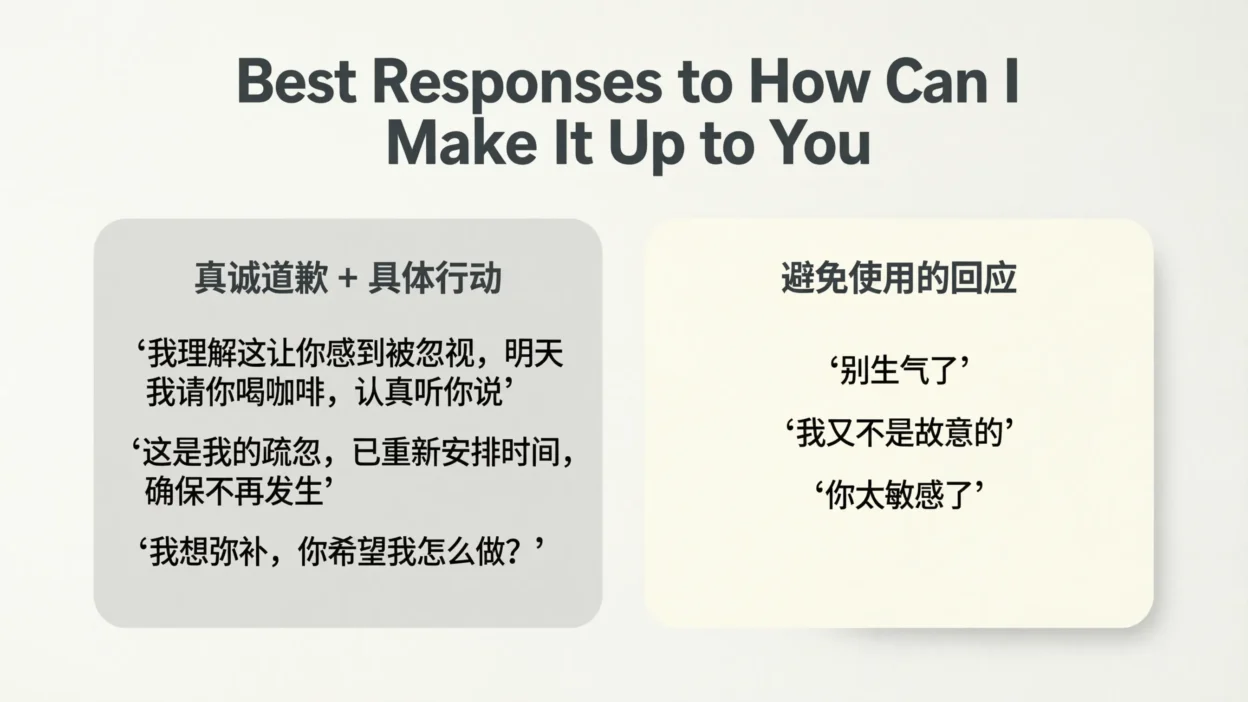
Best responses to how can I make it up to you help you handle apologies with confidence and clarity. Imagine sitting with a friend, your partner, or texting someone who messed up and genuinely wants to fix things. That question can feel tricky. What do you say without sounding harsh, desperate, or dismissive? I’ve been in these moments many times, and having calm, thoughtful replies ready makes the conversation smoother.
In this guide, you’ll find practical, real-life responses that let you stay polite, confident, and authentic. Whether it’s a friend, partner, coworker, or classmate, these replies help you acknowledge their effort, set boundaries if needed, and maintain a positive connection.
By the end, you’ll have ready-to-use responses that fit texting, chat apps, or in-person conversations naturally.
Calm and Respectful Replies When Someone Wants to Apologize
Sometimes people want to make amends, and a calm reply keeps things peaceful and respectful:
- I appreciate that
- Thank you for asking
- That means a lot
- It’s okay, I understand
- I hear you
- I just need some time
- That’s thoughtful of you
- I value your effort
- No worries
- I understand your side
- Thanks, I appreciate it
- That’s kind of you
- I accept your apology
- Alright, let’s move forward
- I respect that
- It’s fine, thank you
- I’m glad you care
- That’s fair
- Okay, thanks for saying that
- I appreciate your honesty
- I’m okay
- Fine, let’s continue
- That works
- I see your point
- Noted, thank you
- Alright, I understand
- Sounds good
- I accept it
- Thanks for being sincere
- Okay, that’s appreciated
- I respect your effort
- Alright, thanks
- That’s thoughtful
- I’m glad you asked
- Appreciate it
- I understand your concern
- Good to know
- I accept your gesture
- Fine, thank you
- That’s clear
Confident Replies That Maintain Your Boundaries
Sometimes you need to stay firm while acknowledging the effort. These responses protect your boundaries:
- I appreciate it, but I need space
- Thank you, but I’ll decide what’s best
- That’s kind, but I need some time
- I value the thought, but let’s move forward slowly
- I’m okay, no need to do more
- Thanks, but I’m handling it
- I’ll let you know what works
- That’s thoughtful, but I’ll manage
- I appreciate your effort, but I’m good
- I need some time before deciding
- Thanks, I’ll consider it
- That’s kind, I’ll think about it
- I’m okay with what’s already said
- Thanks, but let’s take it easy
- I’ll let you know later
- I appreciate it, but I’m fine
- That’s fair, I’ll handle it
- Thanks, but no pressure
- I’ll decide what’s best for me
- I value your thoughtfulness, but I’m good
- I’ll think about it
- Thanks, but it’s already okay
- That’s kind, I appreciate it
- I’ll let you know when ready
- I’m fine, don’t worry
- Thanks, but I’m already okay
- I’ll manage from here
- That works, but I’m good
- I appreciate it, but I’m fine
- I’ll decide what’s next
- Thanks, that’s enough
- I’ll handle it
- That’s thoughtful, but no need
- I appreciate your effort, but I’m okay
- Fine, I’ll take care of it
- I’ll think about it
- That’s kind, I’m okay
- Thanks, I’ll manage
- I’m good, don’t worry
- That works for me
Replies That Keep the Conversation Positive and Friendly
Acknowledging their effort without overthinking keeps things light and natural:
- Thanks, that’s sweet
- I appreciate it
- You’re kind to ask
- That means a lot
- Thanks, it’s okay now
- I’m glad you care
- I value that
- Alright, thanks for asking
- That’s thoughtful of you
- I appreciate your sincerity
- Thanks, it’s fine
- I’m glad you said that
- That’s kind, thank you
- Appreciate it, let’s move on
- I accept that, thanks
- Thanks, that helps
- I’m happy with that
- Okay, that works
- Thanks, I appreciate it
- Good, I’m glad you asked
- That’s thoughtful, thanks
- Appreciate it, no worries
- I’m glad we talked
- Thanks, that means a lot
- I’m okay now
- That works perfectly
- Thanks, that’s kind
- I’m glad you care
- That’s appreciated
- Thanks, all good
- I value your effort
- That’s nice of you
- Thanks, I feel better
- I appreciate your thought
- Okay, thanks
- That’s sweet
- I’m happy with your effort
- Appreciate it, thank you
- Thanks, let’s move forward
- That’s clear, I appreciate it
What to Say Based on Your Exact Situation
Choosing the right reply depends on your context and relationship. Tips for picking a response:
- Match your tone: polite, confident, or friendly
- Consider the platform text, WhatsApp, or in-person
- Think about timing:g reply immediately or take a moment
- Adjust to the person, friend, partner, coworker, or classmate
- Stay calm and authentic; avoid overreacting
40 situational replies:
- Thanks, that’s thoughtful
- I appreciate it
- I’m okay, thanks
- That works for me
- Fine, I accept
- I value your effort
- Thanks, I feel better
- Alright, noted
- I’m glad you care
- That’s kind of you
- Thanks, it helps
- I’m happy with that
- I accept your gesture
- Appreciate it, all good
- Fine, that works
- Okay, I understand
- That’s sweet
- I appreciate your thoughtfulness
- Thanks, it’s enough
- I’m okay now
- Good, thanks for asking
- That’s fair
- Thanks, I’m glad
- I accept that
- I’ll think about it
- That works perfectly
- Appreciate it, no worries
- Thanks, I’m fine
- I’m happy with your effort
- Alright, let’s move forward
- That’s appreciated
- I feel better now
- Thanks, that helps
- I’m glad we talked
- That’s kind, thank you
- Okay, that works
- I value your thoughts
- Thanks, I accept
- Fine, I’m good
- That’s thoughtful, thanks
- I’m glad you asked
FAQs
Q1: How should I respond when someone asks how to make it up to me?
A1: Use calm, polite, or confident responses depending on your comfort level and the situation.
Q2: Can I give them a chance to fix things?
A2: Yes, responses like “I’ll think about it” or “I appreciate your effort” acknowledge their intention without pressure.
Q3: Are these replies good for texting or in-person?
A3: Yes, they work in chats, WhatsApp, or face-to-face conversations naturally.
Q4: How do I stay confident while they apologize?
A4: Choose replies that show appreciation but maintain your boundaries.
Q5: Can I be playful or humorous in my reply?
A5: Absolutely! Playful lines like “Thanks, you’ve already done enough” keep things light.
Q6: Should I respond immediately?
A6: Not always. Sometimes a short pause makes your reply feel natural and thoughtful.
Q7: Will these replies make me seem harsh?
A7: No, polite, confident responses show maturity and respect while keeping boundaries clear.
Q8: Can I ask them to do something specific?
A8: Yes, but only if you feel comfortable. Otherwise, general acknowledgment works best.
Q9: How do I pick the best reply?
A9: Match your tone, context, and comfort level. Be authentic and polite.
Q10: Do these replies help maintain relationships?
A10: Yes, they show respect, thoughtfulness, and emotional intelligence, keeping connections positive.
Conclusion:
Using best responses to how can I make it up to you helps you handle apologies with confidence, calm, and clarity. You stay polite, authentic, and friendly while maintaining boundaries. These replies work in texts, chats, or in-person conversations, making it easy to acknowledge effort without overreacting. The key is reading the situation, picking a reply that feels natural, and staying true to yourself. With these ready-to-use lines, apologies become easier to respond to gracefully, keeping your relationships positive and respectful.